
Free Drug and Alcohol Rehab
Is Free drug and alcohol rehab available? Yes. Call and speak with an experienced addiction clinician for advice and guidance on how to access free drug and alcohol rehab UK.
Is free drug and alcohol rehab available?
Yes.
Every local authority in the UK provides free to use addiction treatment services.
Everyone is entitled to access these services.
Access is not means tested.
The only requriement is that you live in the area that the service is commissoned for and are willing to share your GP details.
We maintain a database of every local authority funded service in the UK and have experience of working in them.
The service they provide depends, entirely, on the contract they are awarded by the local council.
Due to their budgetary constraints, the service is.
We are addictions clinicians.
Our advice is free and confidential.
If you want to bypass free services home detox starts at £1,700 while a weeks residential treatment in a fully staffed CQC registered detox/rehab centres starts at £1,975
The choice of which to use is, entirely, yours.
Here we help you explore your options.
Get The Help You Need Today with clinician advice on free drug and alcohol rehab
Find Me a Rehab exists to provide free clinician advice to anyone seeking free and confidential advice on any aspect of addiction treatment.
Contact UsWhat is free drug and alcohol rehab?
Every council in the United Kingdom provides free to use addiction services.
These are usually commissioned from charity providers, 3rd sector organisations or NHS trusts.
They are completely free to use.
Anyone is welcome to use them: They are not means tested.
The only criteria is that you live in the area they cover and are registered with an NHS GP and are willing to share your GP information.
The service they provide differs from place to place depending on the contract agreed with the local council.
All will provide substitute prescribing for opioids and many offer home alcohol detox (within very narrow and rigid criteria for safety reasons).
A few will offer residential treatment but this is very limited due to financial constraints and the eligability criteria quite specific.
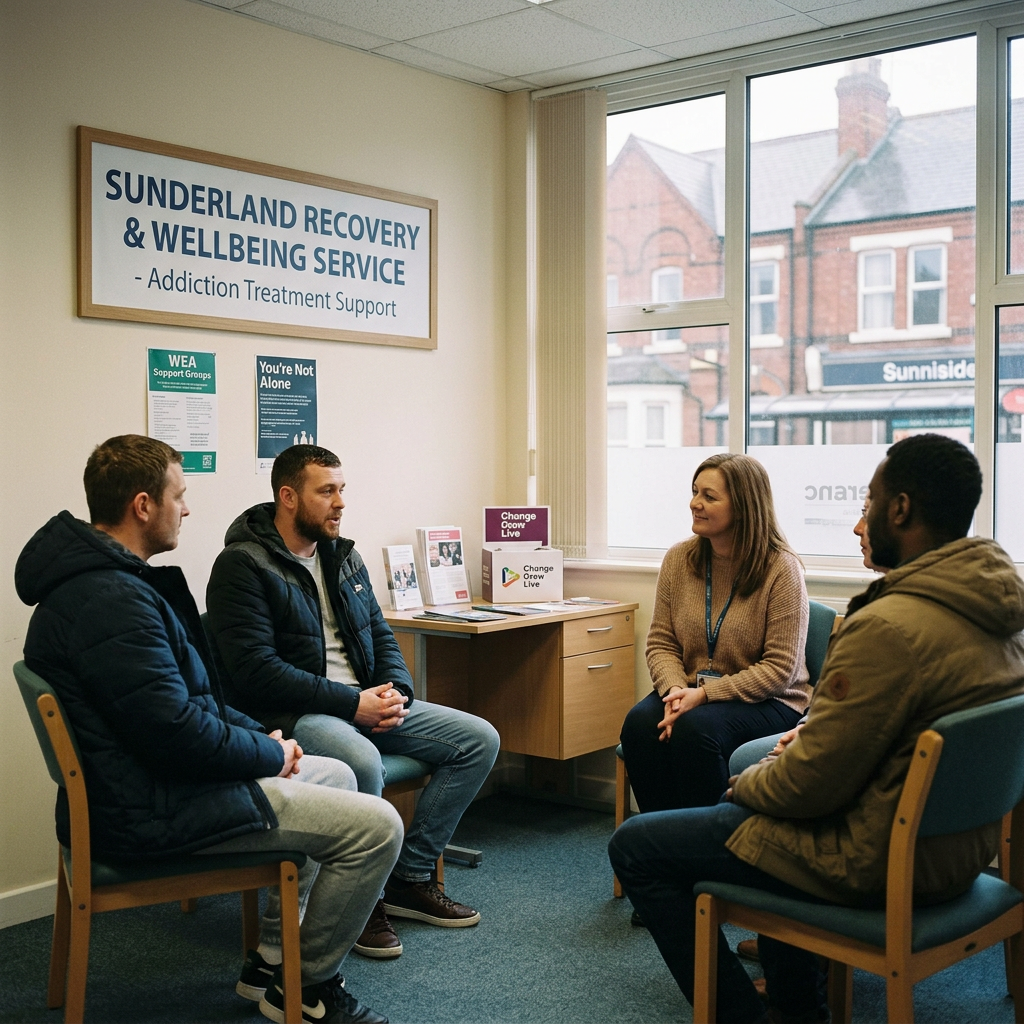
Free Rehab Advice
Free Rehab Advice exists to provide free advice to those seeking admission to drug and alcohol rehabilitation.
Find Out MoreHome Detox
Speak to an experienced addictions clinician on home detox: free and confidential advice.
Find Out MoreResidential Rehab
Call for free advice on residential rehab,detox,recovery, therapy and counselling from a clinician.
Find Out MoreWhat services do local authority drug and alcohol services provide?
The emphasis on local authority drug and alcohol services has always been crime reduction.
They are aimed, primarily, at those who are heroin and crack dependent.
These services provide substitute prescribing, such as Methadone and Buprenorphine, so that clients can obtain medication for free.
The idea being that if they are accessing free medication they will not commit crime to pay for drugs.
Often, clients who use local authority funded services are extremely chaotic and will be inconsistent in their use of services.
Usually, the aim is to maintain someone on a long term substitute prescription, in the community.
When clients are on a therapeutic dose of methadone they don't feel withdrawals or cravings so are less likely to need to fund a habit.
For those with an alcohol problem, local services, where funded, provide a community alcohol (at home) detox.
To be eligable for this there are fixed criteria:
* Drinking under 30 units a day
* No detox within the last six months
* No history of alcohol related withdrawal seizures
* Good physical health
* Absence of certain underlying conditions
* No active or very recent suicidal ideas/acting out
* Not taking certain medications
* Mush have an adult, over 18, to stay with them 24/7 for the first few days.
A community alcohol detox, if it is available, will be considered after a period of engagement with the service.
They are always started on a Monday.
With regards to residential rehab, services are under very tight budgets and only those who are very physically unstable and/or experiencing significant mental health challenges will be considered for funding.
Who can get free rehab in the UK?
Local authorities budgets are very strained.
When you use a local authority funded service, you will be assigned a keyworker, often someone in long term recovery themselves.
If you engage with your keyworker, attend every meeting and groups that are part of your recovery plan then it may be possible for your key worker to apply to the local funding panel.
This is a monthly meeting consisting of professionals from the service (including doctors and nurses) as well as the fundholders at the local authority.
They will only be able to provide a very limited number of rehab treatments and thus only those who are at most risk and who have been engaging will be nominated and ultimately recieve inpatient treatment.
What residential rehab treatment is free in the UK?
Because of the very constrained budgets, local authority addiction treatment services have to be very careful with their expenditure.
Only those whom the funding panel agrees can have funding will get residential treatment.
Unlike private centres which provide detox alongside rehab, many local authority services can only provide a detox.
Sometimes, they may be able to provide a short period of rehab, but this will usually be at another centre and may not be immediately after you finish your detox.
This can be very problematic.
Many people turn to drinks and drugs to suppress difficult emotions, trauma and to numb troubling thoughts.
When your brain recovers, through detox, the thoughts you were suppressing come back.
Without the therapy to help you deal with them, the relapse prevention skills necessary to deal with challenges after detox and aftercare, you are very likely to relapse: Very quickly.
Rapid detox's are not ideal.
If you leave a detox unit, after a rapid detox, you are likely to still be experiencing significant cravings.
The problem is that your brain will not be able to process the same amount of drink and/or drugs as it did when you went into detox.
You will take an amount you think you need to settle yourself and this is when people overdose: Accidentally.
I

Is private rehab expensive?
No.
A weeks admission can be achieved for just £1,975 in a fully CQC registered, fully staffed, safe and efficent rehab centre with a detox included (if needed).
A 28 day admission can be achieved for as little as £6,950
This includes all the essential elements needed:
* Medication assisted/medically supervised detox
* Seven day a week group therapy
* Weekly individual therapy session
* Relapse prevention skills training/development
* After for a minimum of 12 months post discharge
* Full hotel services: Meals, housekeeping, etc

What are the costs for different periods of treatment?
Seven day residiential programmes start from £1,975 for a fully inclusive treatment plan.
The costs increase in-line with the amount of days you spend in rehab:
10 days: £2,800
14 days: £3,850
21 days: £5,575
28 days: £6,950
5 weeks: £8,600
6 weeks: £10,300
8 weeks: £13,500
9 weeks: £15,100
10 weeks: £16,700
12 weeks: £20,000

What is the difference between a low cost rehab centre and a high end one?
In terms of recovery?
Absolutelty nothing!
There are only four essential elements to recovery from addiction
* Detox
* Group therapy
* Relapse prevention skills
* Aftercare
The best way to think about it is to compare it to booking a flight.
If you book a seat in economy you will get to the destination at the same time as someone in first class.
The same outcome is achieved: You get to where you wanted to get to but the experience in getting there may be different.
If the flight is delayed by poor weather or the plane late to arrive for you to board by tecnical issues everyone is inconvienianced: No matter if you turn left or right when you get on.
Both provide the essentials but the more expensive option has some bolt on's which aren't essential but a nice touch.
The same can be said for rehab.
Sure, you can spend a lot more money and have organic freshly pressed carrot juice, do yoga with a minature goat and chant shakras. None of which will make any difference to your recovery.
Why do Find Me a Rehab want me to book a low cost centre?
We are clinicians and not sales people.
Our concern is that you get the most effective treatment, not the most expensive.
Unlike other referral agencies, our primary concern is not how much you spend but rather that you spend wisely and achieve the best care for the lowest cost.
Sure, if you want to access a high end centre we can certainly signpost and refer you to one.
Other referral companies are solely interested in maximising their commission which is why they want to upsell things you really don't need.
It just wouldn't sit right for us to try and get you to part with money you don't need to.

Still Have Questions on the cost of drug rehab UK?
Call UsWould I be better off in a private hospital to have detox and rehab treatment?
One of our clinicians undertook advanced prescribing training at the Priory Roehampton with the worlds leading expert in addiction medicine.
The cost of a month at the Priory is over £28,000
While you would have a consultant psychiatrist in charge of your care, the treatment plan and process is exactly the same as any other rehab centre:
* Detox
* Group therapy
* Relapse prevention
* Aftercare
The only difference is that you would be seen by the consultant in ward round once a week.
In a private hospital the same rules apply:
You must atttend all groups and meetings, on time. The medication you would recieve, if applicable, would be exactly the same and the nursing/support worker care would also be identical. Being in a private hospital doesn't mean any difference in the treatment process.
You are paying for a brand. If you opt for a lower cost centre the same treatment plan can be accessed for £6,950.

What are the costs in various centres?
In the UK there are centres that are independently run and those that are part of a chain.
Independently run centres tend to be less expensive that chain run centres.
As most centres offer a minimum of a 2 week stay (if appropriate) we have listed some 28 day options, around the country as a comparator:
Wales: £7,950
Midlands: £6,950
Oxfordshire: £15,750
Guildford £15,750
East Sussex £11,495
Bedfordshire £10,495
Cheshire £18,000
Halton £8,795
Bradford £9,995
Yorkshire £10,995

Free Rehab Advice
Free Rehab Advice exists to provide free advice to those seeking admission to drug and alcohol rehabilitation.
Find Out MoreHome Detox
Speak to an experienced addictions clinician on home detox: free and confidential advice.
Find Out MoreResidential Rehab
Call for free advice on residential rehab,detox,recovery, therapy and counselling from a clinician.
Find Out MoreHow long do I need in rehab to recover from addiction?
The amount of time you will need in rehab determines the cost.
Unlike booking a holiday, the time you can book for, as a minimum, depends entirely on your clinical need.
For an example, if you are heavily dependent on alcohol and need a medication assisted detox, this will take an absolute minimum of seven to ten days.
Again, it depends on a number of factors but, usually, can not be negotiated.
Your safety is the absolute priority.
Clients who are opioid dependent, for example, will require a longer admission. Rapid detoxing is unsafe and no reputable centre would offer one.
A rapid detox puts you at very significant risk as you would leave rehab in withdrawal with no tolerance to opioids. The risk is that you would try and relieve your withdrawals with an amount of opioids you feel will settle you.
Invariably, this amount would lead to overdose.
The same applies to benzodiazpeines and a number of other substances.

What is the lowest cost for a week?
Mild alcohol and stimulant (cocaine) dependency can be addressed with a combination of residential and outpatient recovery.
No centre would accept you for less than a week.
A seven day admission can be achieved from as little as £1,975 a week.
This includes everything you need for a safe detox:
* Medical supervision
* Prescribed detox medication
* Hotel services (full catering, housekeeping,etc)
* Group therapy
* Relapse prevention
*Aftercare
For those seeking treatment at home, we always advise clients to seek residential treatment as it is inherently safer and often far less expensive.

Why do all centres reccomend a 28 day programme?
Detox, alone, is only one element of recovery from addiction.
Your brain will not start to absorb the essential elements of therapy, relapse prevention and aftercare until it has returned to a more normal level of functioning.
Some people can starts groups on their first day, others may need to wait a day or two due to the physical effects of detox.
All centres follow a gradiated therapy programme: Either a 12 step, SMART or eclectic approach.
This means that, when following the programme, there will be elements completed along the way.
28 days gives you the opportunity to make very significant progress in your recovery.
That, in no way, means that your treatment ends when you leave.
Rehab is only the very beginning of the process. It gives you the springboard you need to achieve long term recovery.

Do some people need more than 28 days?
The therapy programme in recovery is a revolving process.
It doesn't mattter if you get admitted on a Monday or a Sunday.
Those who stay more than a week usually recieve a weekly session of individual therapy.
Nearly a hundred years of rehab research shows that group therapy is the most effective treatment approach.
If you think you are not the kind of person that would benefit from group therapy then you absoultely are the kind of person that will!
The reason that some people need more than 28 days is because some drug dependencies can take more than 28 days to detox from. A good example being benzodiazepines.
However, if you work with your GP/consultant, you can taper down at home and then enter into residential treatment for the final furlong.

Michael Imonirhua
Michael has been a qualifed substbance misuse practitoner since 2007.
He overcame his own addiction and thrives in recovery by using is lived experience to enhance his work with clients.
He is extremely passionate about person centred care having experienced the drawbacks of traditional community service provision.
Michael holds diplomas in:
* Counselling
* Conflict management
* Group work
* Cognitive behavioural therapy
* Advanced group facilitation
Michael maintains a busy caseload of clients who are overcoming addiction as well as those seeking treatment for PTSD, tramua and other mental health conditions.
In addition Michael is a skilled and experience educator and trainer aside from his role as clinical director of a private treatment service in London.

Free Drug and Alcohol Rehab:Frequently Asked Questions on Free Drug and Alcohol Rehab
Unsurprisingly, we get asked a lot of questions, to make things easier for you, we have included some of the most common one below.
How do I get a free detox on the NHS?
Your local authority (who you pay your council tax to) is responsible for free to use services.
They can provide the service themselves, contract in a private company, a charity or the NHS.
In order to get a free detox there are many hoops to jump through.
You will need to register with the local service and attend all meetings and group sessions assigned to you.
In time, if it is deemed necessary, your keyworker will apply to the local authority funding panel.
Where you go and how long for will be outside of your control.
Will the NHS pay for drug and alcohol rehab?
Potentially.
Your local authority is responsible for providing addiction services that are free to use.
They buy in services from private companies, charities and the NHS.
Funds are very, very limited.
It is possible to get free rehab but it won’t happen overnight.
There will be a lengthy period of assessment and you will need to attend every meeting and group assigned to you.
In time, your keyworker will, if necessary, apply to the local authority for funding.
Local authorities have agreements with rehab centres where they agree to purchase a certain number of bed days a year. This gives them a substantial discount.
As such you will not have a choice as to where you go or for how long.
Does the NHS pay for alcohol home detox?
Yes and no.
Your local authority is responsible for providing free to use addiction services in your area.
This can be provided by them, directly or by contracting in a private company, the NHS or a charity.
Whomever provides the service, a home alcohol detox is usually available: Free of charge.
However, there are some restrictions which are all due to safety.
The exemptions are, usually:
- Drinking more than 30 units a day
- Previous alcohol detox in the last 6 months
- Co dependent on illegal drugs
- Have a live prescription for benzodiazepines, Pregabalin, Gabapentin and/or strong opioids
- History of alcohol related withdrawal seizures
- Live alone and not able to have an adult to help, 24/7, for the first few days
Will the NHS pay for home heroin detox?
No.
The only detox that can be provided at home, on the NHS, is for alcohol.
Can I get addiction therapy on the NHS?
Yes.
Your local authority, who provides free to use addiction services, can provide you with specialist addiction talking therapy.
This might be through a private company, charity or bought in NHS services.
Can I get a Naltrexone implant on the NHS?
No.
Naltrexone implants, while not illegal, are not licenced in the UK.
That doesn’t mean you can’t get one but you will have to pay, privately, to have one put in.
Will the NHS pay for Buvidal?
Yes, in certain circumstances.
Your local authority provides free to use addiction services in your area.
They can buy in services from the NHS, charities or private companies.
Whomever provides the service can provide Buvidal if the local authority has agreed to fund it in their service level agreement.
Buvidal is very expensive and there will be restrictions around it’s use.
Usually, it is restricted to those people who have been in treatment for some time and keep all appointments, meetings and attend all groups and sessions. You will also need to provide clean drug screens.
Is Ibogaine available on the NHS?
No.
Ibogaine is not legal in the UK.
It is dangerous, has no approved medical uses and has been responsible for many deaths.
Please do not attempt to buy Ibogaine or travel overseas for Ibogaine treatment.
Can I get Ayahuasca on the NHS?
No.
Ayahuasca is a dangerous and unlicensed treatment.
It has no proven medical uses and has been directly connected to multiple deaths.
Can I get an alcohol detox in A+E?
No.
The National Health Service is not funded to provide alcohol detox in accident and emergency.
You can not buck the system.
If you attend A+E for an alcohol detox they will assess you and, most likely give you a leaflet and send you home.
If you try and get around this by attending in withdrawal, they will give you some medication only up until the point that you are safe to leave. They are not going to admit you.
The staff will give you information on how much you need to drink to safe safe and offer you a referral to the local alcohol service.
The only way they would ever admit you is if you had an acute medical emergency and needed a detox by default because you are in hospital and have no access to alcohol.
Contact Support For Free Drug And Alcohol Rehab
if you find yourself in need of assistance at any hour, we're here to support you around the clock.
Whether it's the dead of night or the crack of dawn, our team is available 24 hours a day, 7 days a week, ready to lend a helping hand whenever you require it.
So, if you ever find yourself in a pinch or simply need someone to talk to, don't hesitate to reach out.
We're committed to being there for you whenever you need us, no matter the time.
We only signpost to legally registered services.