
Choosing Between Residential and Outpatient Detox
January 16, 2026
11:51 am
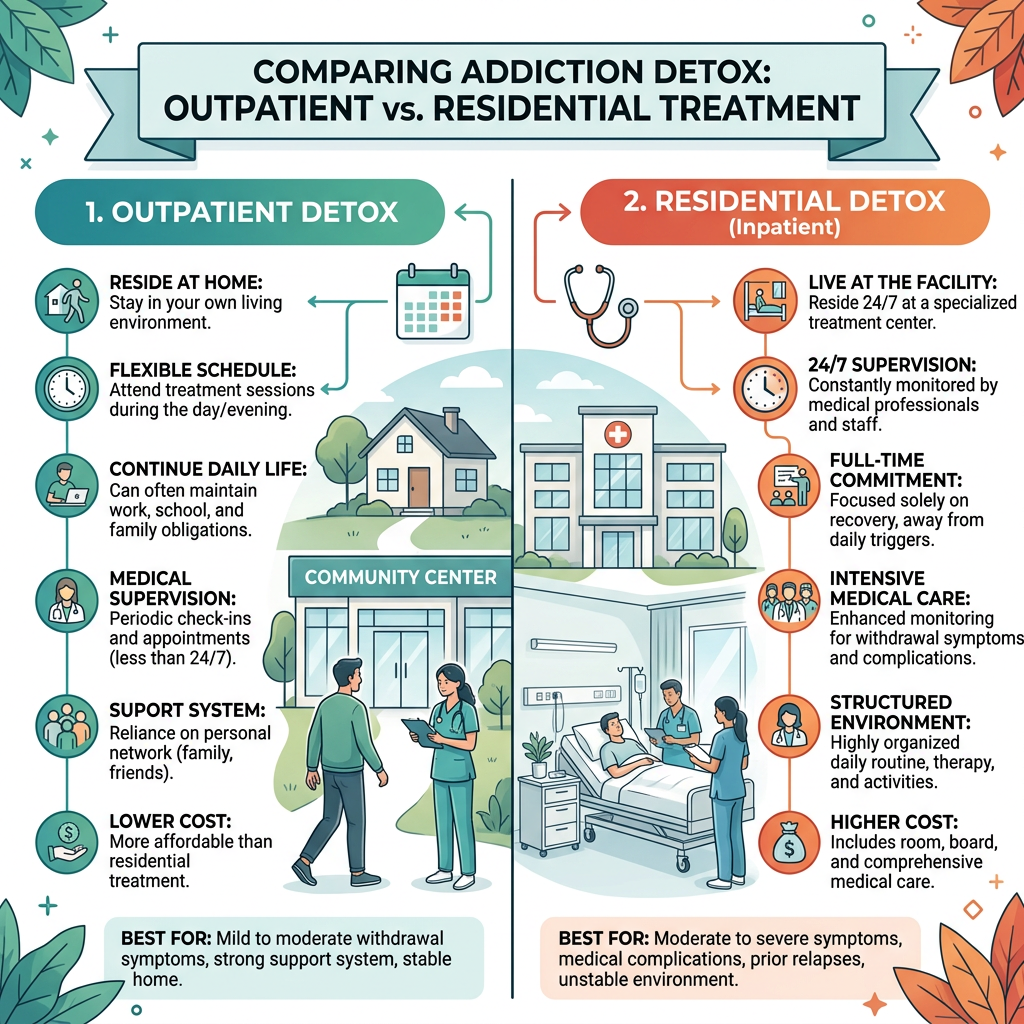
Table of contents
- Introduction
- Safety is paramount
- What is Outpatient Treatment?
- Who Can Have a Home Alcohol Detox?
- Illegal Home Alcohol Treatment Companies
- Drawbacks of Home Alcohol Treatment
- But I Have Been In Rehab, I Know What I am Doing!
- Benefits of Residential Treatment
- Relapse happens
- Free Expert Clinician Advice and Referrals
- Getting help
Introduction
Addiction Detox: Residential or Outpatient?
An age old question.
Let our expert addictions clinicians answer this question for you.
Depending on your particular circumstances, treatment as an outpatient may be available. When considering Addiction Detox: Residential or Outpatient? it’s important to understand the options that might suit your needs best.
Every case is treated on it’s own merits and safety is the overriding deciding factor.
Safety is paramount
Just because you can pay for it doesn’t mean it is safe.
Home treatment, by it’s very nature, is limited.
If you had a localised infection in your leg, you might get some antibiotics. A district nurse could come to your house and change your dressings. Alternatively, you could go to the GP surgery.
Should you develop gangrene you would be in hospital.
It is the same principal with addiction treatment: Before the problem becomes very serious, it might be possible to treat it as an outpatient. When it passes a certain point: It can’t be treated outside of hospital.
What is Outpatient Treatment?
Some drug addictions do not require a detox.
Healthcare providers can manage occasional cocaine use, intermittent chemsex drug taking, and very mild alcohol dependency as an outpatient.These are among the presentations suitable for outpatient care.
After an assessment with an addictions clinician, they will draw up a treatment plan. This plan may include medication. One of the experienced addictions therapists will draw up a therapy treatment plan to run alongside medical treatment.
There are occasions where a “home alcohol detox” is possible for alcohol dependency.
The system limits these situations and provides little wriggle room as to who is eligible.
Who Can Have a Home Alcohol Detox?
The criteria for exclusion includes:
- Over 30 units a day
- Previous detox within the last 6 months
- History of alcohol withdrawal related seizures
- Severe mental illness
- Other precluded medications
Illegal Home Alcohol Treatment Companies
Many of the companies who provide home alcohol detox do so illegally.
Ordinarily, a company needs to be registered with the appropriate inspectorate to provide medical services. The inspectorate depends on the area of the country they operate in, such as the Care Quality Commission for England.
Exceptions to the regulations
There is an exception to this. A doctor can offer private treatment if registered on the specialty register for addictions with the General Medical Council. This is when they undertake addiction work in their paid job and do this as a “side hustle.”
This exception only applies when the doctor conducts the whole process: from start to finish.
As soon as someone else is involved, it becomes regulated activity and you need registration.
Legality
The vast majority of the companies on the internet are providing this service illegally.
They charge in excess of £1,850 for £20 worth of medication.
There is no clinical governance, no fallback and no safety.
Rouge companies will want payment, upfront, before you are assessed (if you call a 20 minute phone call an assessment). In the rare instance that they decline treatment a refund will be a long way away.
Drawbacks of Home Alcohol Treatment
Having a home alcohol detox sounds ideal, doesn’t it?
No strangers to speak to, no groups to go and you can work from home, if you need to.
Therein lies the problem!
Merely treating the problem with medication (as is needed for a detox) won’t work.
if you don’t deal with the underlying reasons as to why you needed a detox you will relapse: fast.
Home detox’s usually fail after a week or two: They are akin to rearranging the deckchairs on the titanic.
But I Have Been In Rehab, I Know What I am Doing!
Famous last words.
If you broke your leg and had surgery would you try and fix it yourself , at home, if you broke it again?
Relapse happens: Fact. It doesn’t happen to everyone but when it does it is imperative to get help so it doesn’t get worse.
Treatment at home may even cost more than rehab: It often does.
Key Takeaways
- Choosing between Addiction Detox: Residential or Outpatient depends on individual circumstances and safety.
- Outpatient treatment can work for mild cases, but home detox isn’t safe for everyone and may lead to relapse.
- Residential treatment offers a structured environment with continuous support and therapy, aiding in detox and recovery.
- Many illegal home treatment companies lack the necessary regulations, risking patient safety and financial loss.
- Expert clinician advice is available for safe treatment options and to address doubts about effective detox methods.

Benefits of Residential Treatment
Whatever you are addicted to, there will be a residential treatment centre that can help.
Whether it is alcohol, heroin, cocaine, GHB, Ketamine, LSD or the whole lot combined: It doesn’t matter.
The experienced addictions clinicians in rehab centres will know what to do.
They will work with you to draw up a collaborative treatment plan so you can detox: Safely.
Therapy
The therapy team will welcome you into the groups and sessions.
Challenging though they will be, these sessions will enable you to explore why you were using.
Think of it like clearing a drain blockage. Until you clear it, noting will pass.
Relapse Prevention and Aftercare
Rehab is a safe, warm, nurturing environment.
Everything is taken care of, 24 hours a day.
Restaurant style meals are served in a dining room. Rooms are cleaned, refreshments are made available. You can concentrate on your recovery.
When you go home it is time to put what you have learned into practice.
The skills you learn in rehab will prepare you for dealing with stressful situations (and people!)
Relapse happens
Relapse happens: FACT. It doesn’t happen to everyone, but if you know how to manage when it happens, you are in a much better place.
All centres provide a minimum of a years aftercare.
This is , usually, a weekly support group and regular telephone check in.
Should you be struggling, there will be a number for you to call for support.

Free Expert Clinician Advice and Referrals
We are experienced addictions clinicians.
On a daily basis, we help people caught up in addiction.
Our advice is free and confidential.
It matters not to us where you go for treatment, only that it is safe and cost effective.
What you need and what you don’t
We can advise you as to what you need: and what you don’t.
Yoga with miniature goats, organic green tea fresh from the Himalayas and gong baths are all very nice but you don’t need them and they don’t add any value.
Using an app, whichever one of our clinicians is free will take your call.
Ensuring your safety
We are registered with the Information Commissioners Office.
As centres are legally required to be registered with the appropriate regulator, we only signpost to those that are.
Getting help
Addiction Detox: Residential or Outpatient? Call us and we can help.
Our experienced addictions clinicians have decades of experience in working in both residential and outpatient services. There advice is free and confidential. They can advise you on treatment options, locations and costings.
Need help finding the right rehab for you or a loved one? Get in touch today and take the first step toward recovery.
Speak to usRecent Posts
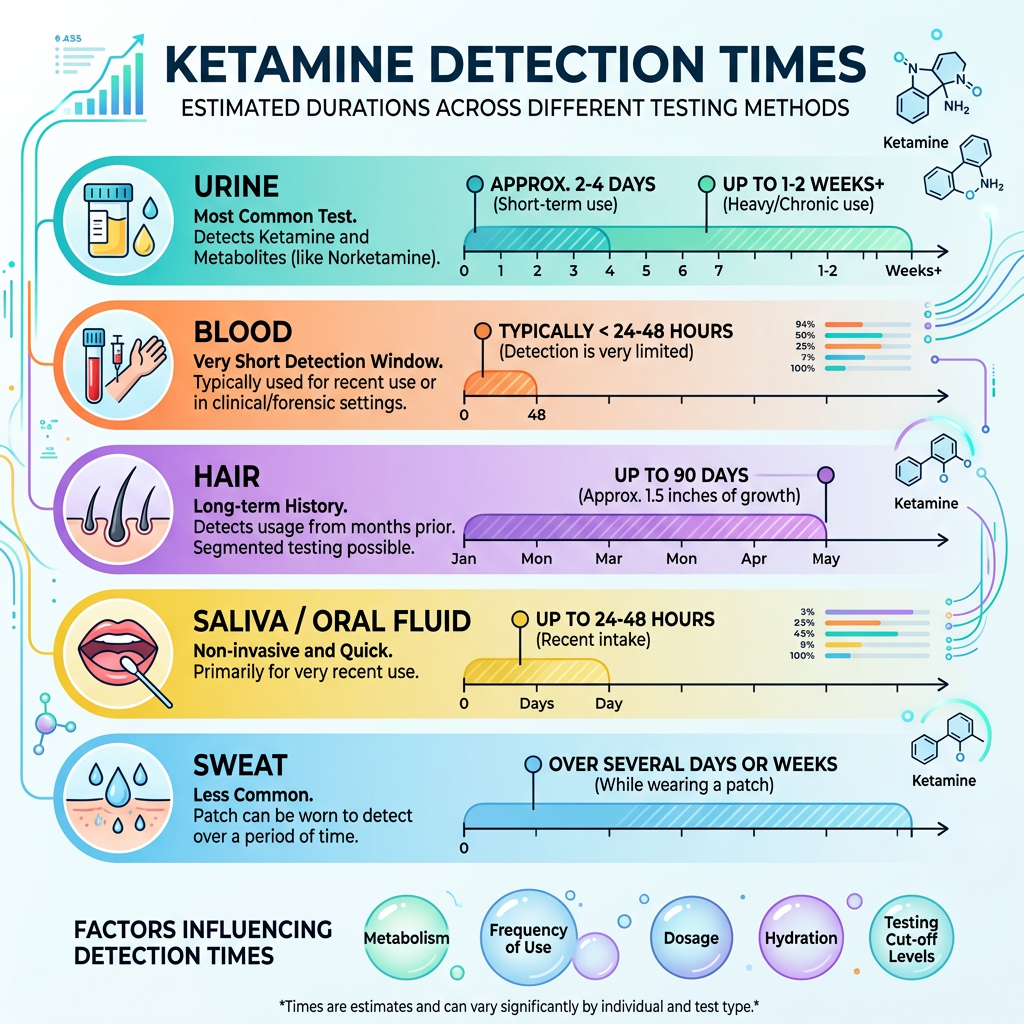
How long does Ketamine stay in your system?
How long does Ketamine stay in your system? As an experienced addictions clinician with over thirty years experience my question to that is: Why do you need to know? Is it because you are worried it will show up in a drug screen at work? Are you worried about being drug tested by the police…
Grace Kennedy
12:23 pm, July 2, 2026
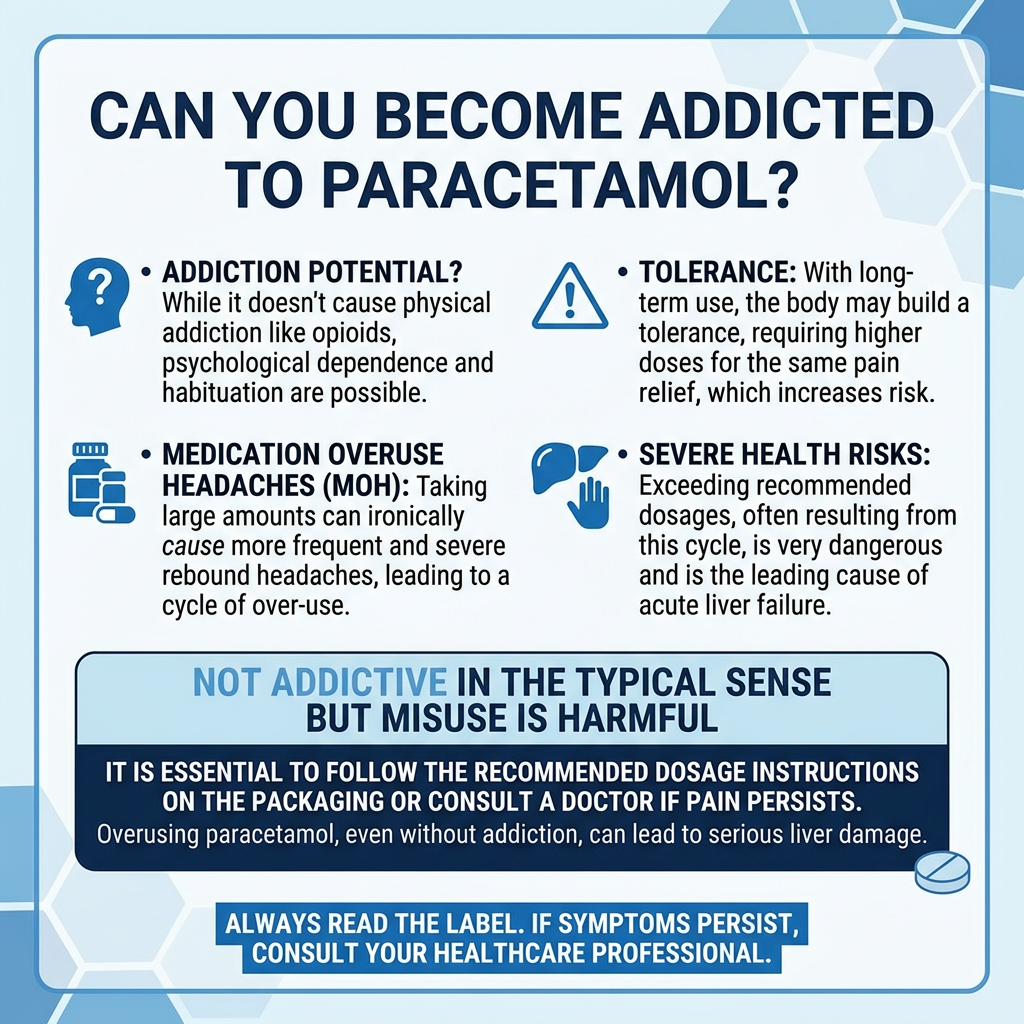
Can you become addicted to Paracetamol?
Can you become addicted to Paracetamol? No. Well not it in the same way you become addicted to heroin or alcohol as the way it affects the brain is different. That doesn't mean that some people are not addicted to taking it in the way that they take it, repeatedly. How does Paracetamol work? The…
Grace Kennedy
6:08 pm, June 26, 2026
Can you do a Methadone detox at home?
Can you do a Methadone detox at home? In theory: Yes. In practice: No. It is a nice idea that you can stay at home, take some methadone and your opioid use disorder is cured. Sadly it just doesn't work like that. In order to understand why this won't work you need to know what…
Grace Kennedy
6:49 pm, June 25, 2026