
Is Methadone Addictive?
June 16, 2026
12:14 pm

Table of contents
- Introduction
- Why use Methadone?
- History of Methadone
- Veterinary use
- Development of Methadone for opioid substitution therapy
- What does Methadone do?
- The Role of the Locus Coeruleus in Withdrawal Symptoms
- So is Methadone addictive or not?
- What does a treatment plan with Methadone look like?
- What time of day should it be taken and how much is enough?
- How long should I be on Methadone?
- I only want a low dose of Methadone
- Where can I get Methadone and advice on Is Methadone addictive?
- How does a Methadone prescription work?
- What happens if I miss a Methadone dose?
- Do I have to keep going to see my keyworker at the addiction service?
- What happens if I loose my Methadone script?
- Is taking Methadone enough to cure opioid addiction?
- How can I recover from opioid use disorder?
- How can Find Me a Rehab help with : Is Methadone addictive?
- Getting help with : Is Methadone addictive?
Introduction
Is Methadone Addictive?
A question we get asked an awful lot.
We could give the answer here in the introduction but the answer is very nuanced.
There are more myths floating around the internet about Methadone than there are about Bruce Lee working in Tesco’s and the moon landings being fake.
It will not rot your teeth: FACT
Methadone does not get into your bones: FACT
It was invented by the Nazi’s: Not quite.
Methadone is only for pain relief or addiction: FALSE
Our experienced addictions clinicians each have decades of experience prescribing Methadone.
Here they share their knowledge with you so that you can make an informed choice.
Is Methadone addictive? Read on…..
Why use Methadone?
Methadone is a well established substitute for Heroin and opioid addiction as well as being used in hospitals and hospices for patient care for pain control.
Available all over the world it is used in every community drug and alcohol service and prison addiction treatment unit.
Private, as well as locally authority funded rehabs that provide opioid and heroin treatment also use Methadone.
Known as Physeptone and in the US: Dolaphine, Methadone remains the gold standard of substitute prescribing for anyone wanting to come off opioids and heroin.
History of Methadone
In the 1930’s, with the build up to WW2, Germany was short of Morphine.
Scientists at IG Farben developed a substance called Polamidon.
After the war, it was licenced in the United States as Methadone. Because the allies took control of all German patents the transition to manufacture in the USA allowed companies to buy a licence to produce it for one dollar.
The has been a long standing myth that Dolophine, as Methadone is known as in the USA, was named as such in tribute to Adolf Hitler. This is simply not true.
Dolophine is named as such as it derives from the Latin word for pain (dolar) and end (finis). Thus Dolophine means pains end.
Originally, Dolophine (Methadone) was licenced for intracctable hiccups, then pain control and finally as treatment for opioid and heroin addiction.

Veterinary use
As with a lot of human medicines, Methadone is used on animals.
It is used to help sedate animals as well as for pain relief.
Commonly, Methadone is used for hysterectomies in dogs and when treating cattle and sheep.
As Methadone is twice as strong as Morphine it is a lower cost alternative.
Development of Methadone for opioid substitution therapy
Initially, Methadone was used to treat chronic hiccups despite it’s pain relieving power being known.
In the 1950’s, at the Addiction Research Center in Kentucky (USA) as well as the Rockerfeller University in the 1960’s, the ability to subdue opioid and heroin withdrawal, with Methadone, was exploited.
In the 1976 Methadone clinics opened in major cities in the USA, namely Chicago, New Haven and New York. Over 38,000 people, alone, were being treated in New York City with Methadone.
What does Methadone do?
Methadone is a fully synthetic opioid, meaning it was created in a laboratory.
When you take opioids over a period of time, your brain becomes used to it’s presence.
The Role of the Locus Coeruleus in Withdrawal Symptoms
One of the most important brain regions involved in opiate withdrawal is the locus coeruleus.
This small but powerful structure in the brainstem regulates norepinephrine, a neurotransmitter involved in arousal, alertness, and the stress response.
Under normal conditions, opiates suppress activity in the locus coeruleus, producing calmness and sedation.
With chronic opiate use, the locus coeruleus adapts by increasing its baseline activity.
When opiates are removed, this system rebounds aggressively, releasing excessive amounts of norepinephrine.
This neurological overactivation is responsible for many classic opiate withdrawal symptoms, including anxiety, agitation, insomnia, sweating, elevated heart rate, and high blood pressure.
The intense “fight or flight” sensation experienced during opiate withdrawal is rooted directly in this dysregulated stress circuitry.

So is Methadone addictive or not?
No.
Methadone is an opioid.
If you are opioid dependent and you enter into a Methadone treatment programme, should you stop taking the Methadone you will experience the withdrawals mentioned above.
Thus Methadone is not addictive in itself but merely a means to replace illicit opioids or prescribed opioids that have become problematic.
The reason people think it is addictive is because of the distress caused should you not be able to access it.
However, if you view opioid use disorder as a serious illness then you would view Methadone as essential treatment.
After all, you would not deny a diabetic their insulin.
If you view Methadone as essential medication for a serious illness then you will understand how important it is.
What does a treatment plan with Methadone look like?
Methadone can be started as soon as someone starts to withdraw from opioids.
Without getting too technical, only 50% of the heroin people take is absorbed in the body and the immediate effects last mere minutes.
If you take it regularly and stop, you will start to experience withdrawals in as little as six hours.
The prescribing clinician will prescribe an initial amount that will stop your withdrawals (usually 30MG, sometimes 40MG). Only a consultant psychiatrist addictions specialist would entertain a higher initial dose.
This dose will increase, gradually, until your withdrawals have stopped.
Usually, your daily dose would not increase beyond 60MG a day in the first week.
Sometimes people are prescribed a “split dose” (half the dose in the morning and half later in the day) for the first few days if there are concerns over physical health.
Key Takeaways
- Methadone is not addictive in itself; it is a treatment for opioid dependence.
- It is a well-established substitute for heroin and opioid addiction, used globally in various medical settings.
- People often confuse Methadone’s necessity for managing withdrawal symptoms as addiction, but it serves as essential medication.
- Treatment with Methadone should be viewed as a long-term process, often requiring a year or more to stabilize before tapering off.
- For effective recovery, a comprehensive approach including detox, rehab, and aftercare is essential.
What time of day should it be taken and how much is enough?
A very famous expert in addiction medicine, Professor Adam Winstock, has always said that a decent dose of Methadone should last 25 hours a day.
What he means is that when you get up in the morning if the first thing on your mind is getting your Methadone because you are in withdrawal then your dose is insufficent.
Methadone’s effective range is between 60-120 MG a day.
However, just as with Insulin, if a patient is displaying symptoms, the dose needs adjusting.
It is not uncommon for people to need more than 120MG.
How long should I be on Methadone?
This is where a lot of people go wrong.
Treatment with Methadone is a marathon and not a sprint.
Ideally, in order to give your brain sufficient time to recover from the removal of heroin/opioids from the receptors, you should become steady on Methadone and stay on that dose for a year.
Then you should reduce, at a very slow pace, until you reach zero.
For some people, long term maintenance is incredibly effective and stops them using drugs.
There is no answer to this question other than to say that if Methadone is working for someone, why rush to stop it?
I only want a low dose of Methadone
Low dosing doesn’t work anymore than taking a quarter of a Paracetamol for a migraine.
Methadone does not rot your teeth or bones. Ignore the well meaning advice of people who don’t have the experience to give you impartial and expert advice.
The biggest mistake made by people on Methadone is taking small doses and rushing a detox.
Unless your dose completely suppresses your withdrawals and you come down on your dose at a slow enough rate so you don’t experience withdrawals, it won’t work.
If you drive your car with your foot on the accelerator to the floor then lightly tap the brake the car will not stop.
The same applies to using Methadone.
Methadone is an extremely effective medication for opioid use disorder.
If you use is correctly it can be life changing.
Should you insist on low initial dosing and a rapid reduction it won’t work.
Where can I get Methadone and advice on Is Methadone addictive?
Not from your NHS GP.
Due to the way NHS GP’s commission services, there are only a very small number of NHS GP’s who are commissioned to provide addiction services as these are funded by the local authority.
Thus a local authority has the ability to fund an NHS GP surgery to provide addiction services. In 2026 these are now extremely rare though some GP surgeries rent out space to addiction services paid for by your council.
Every local council provides addiction services, free at the point of contact, in the United Kingdom.
All of these will provide Methadone prescriptions if appropriate.

How does a Methadone prescription work?
You will need to engage with a keyworker at the addiction service as well as provide urine samples.
Methadone is an opioid. If you are not in withdrawals from opioids and take Methadone you will overdose.
Therefore you must evidence opioid use.
You will be seen by a clinician who will assess you for signs of withdrawals as well as checking your medical history and current medications.
If you are prescribed Methadone you will be given a blue prescription. This is simply because of the way Methadone is dispensed in installments and blue prescriptions are required for this element of treatment on the NHS.
At the start you will need to attend a pharmacy every day to have your Methadone under the supervision of pharmacy staff.
If you attend daily, test negative for drugs on regular urine screens, you can ask for your Methadone to be dispensed every week for you take at home.
What happens if I miss a Methadone dose?
If you are on daily supervised consumption, should you miss three consecutive doses the chemist shop have to stop your prescription: This is a Home Office requirement.
A clinician, from your addiction service, can lift the hold after you go and see them though your prescription may need to be altered for safety reasons.
If you miss multiple doses your clinician may have to stop your treatment and start the prescription off at 30MG again.
This is for your safety.
If you collect your Methadone from the chemist and there are issues with you collecting and/or you test positive for drugs it may be necessary to revert to supervised consumption.
Do I have to keep going to see my keyworker at the addiction service?
Yes!
If you don’t engage your prescription could be curtailed or even stopped.
Getting a prescription for Methadone is not a right but part of a collaborative treatment plan.
Should you miss appointments, decline to provide urine samples and/or attend while intoxicated the service is under no obligation to continue to provide a script.
What happens if I loose my Methadone script?
In short, the answer is that you won’t get another one.
Usually, scripts are delivered to the chemist for you to avoid any issues.
If you collect Methadone from a chemist it will never be replaced regardless of any reason you provide as to why it needs to be.
Methadone prescriptions are never, ever, replaced.
Is taking Methadone enough to cure opioid addiction?
No!
Addiction is a symptom of past trauma that is unresolved.
While Methadone will, most certainly, provide an exceptionally effective treatment for opioid use disorder, medication is merely one element of treatment.
Unless you tackle the reasons as to why you feel the need to escape reality , through taking drugs, relapse is inevitable.
How can I recover from opioid use disorder?
Effective recovery stems from four interlinking aspects: Detox, rehab, relapse prevention and aftercare.
Detox is getting settled on Methadone so you don’t experience withdrawal and then reducing at a rate that doesn’t leave you in withdrawal. This is a minimum of 28 days.
Group therapy is the mainstay of rehab. Finally lifting the lid on that box of emotions you have tried to suppress.
Getting help for the anxiety and low mood you have self medicated with drugs and alcohol.
Learning how to regulate your emotions without drugs.
Relapse prevention is about learning how to navigate difficult situations, when back home, that would have led you to use before rehab.
Aftercare is all about continuing to heal and recover so you can thrive : not just survive.
How can Find Me a Rehab help with : Is Methadone addictive?
We are addictions clinicians.
Each of us have over three decades of experience assessing, diagnosing, prescribing for and treating people struggling with addiction.
We have treated thousands of people using Methadone.
Our experience has been gained in prisons, private hospitals, private rehab centres, local authority community addiction services, statutory funded residential rehab centres and 3rd sector provision.
Only legally registered services are signposted.
If you are looking for informed answers to the question Is Methadone addictive? call, live chat, email or whattsap one of our experienced addictions clinicians for free, impartial and confidential advice.
We never charge for advice or referrals.
Getting help with : Is Methadone addictive?
Call, email, livechat or Whattsap one of our expert addictions clinicians for free, confidential advice on any aspect of addiction, detox, rehab, home detox, therapy, relapse prevention and aftercare.
Because we are not tied to any particular service, our advice is wholly impartial.
Between us, we have worked in nearly every rehab centre in the UK.
Is Methadone addictive?
No.
Need help finding the right rehab for you or a loved one? Get in touch today and take the first step toward recovery.
Speak to usRecent Posts
Is Methadone Addictive?
Introduction Is Methadone Addictive? A question we get asked an awful lot. We could give the answer here in the introduction but the answer is very nuanced. There are more myths floating around the internet about Methadone than there are about Bruce Lee working in Tesco's and the moon landings being fake. It will not…
Grace Kennedy
12:14 pm, June 16, 2026

Rehab Options for International Citizens: A Guide
Rehab options for overseas citizens is a growing phenomena. The world is not as large as it used to be. You can reach Australia in a day on a single flight when it used to take days with multiple stop overs. People move and businesses migrate. The UK is home to many multinational companies Companies…
Grace Kennedy
2:03 pm, April 20, 2026
Hippy Crack Addiction: Risks, Symptoms, and Recovery Guide
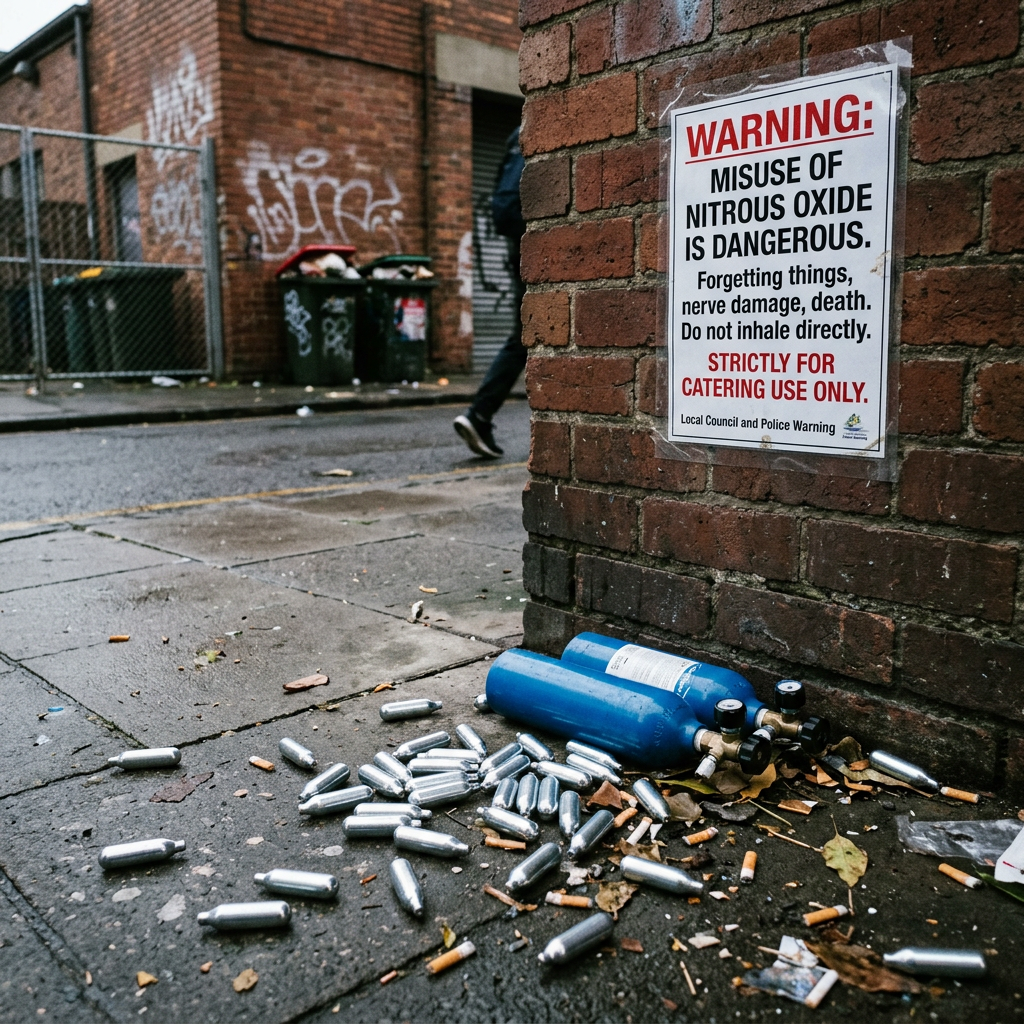
Introduction Hippy crack is dangerous: Very dangerous. Nitrous oxide, laughing gas, whippets or NOS: Call it what you like. Nitrous oxide is nothing new. Originally manufactured and licensed as an anesthetic, it is now widely abused. Discarded aluminium canisters and balloons after festivals. Not the sign of harmless teenage fun. Addiction to Nitrous Oxide can…
Grace Kennedy
10:37 am, March 3, 2026